
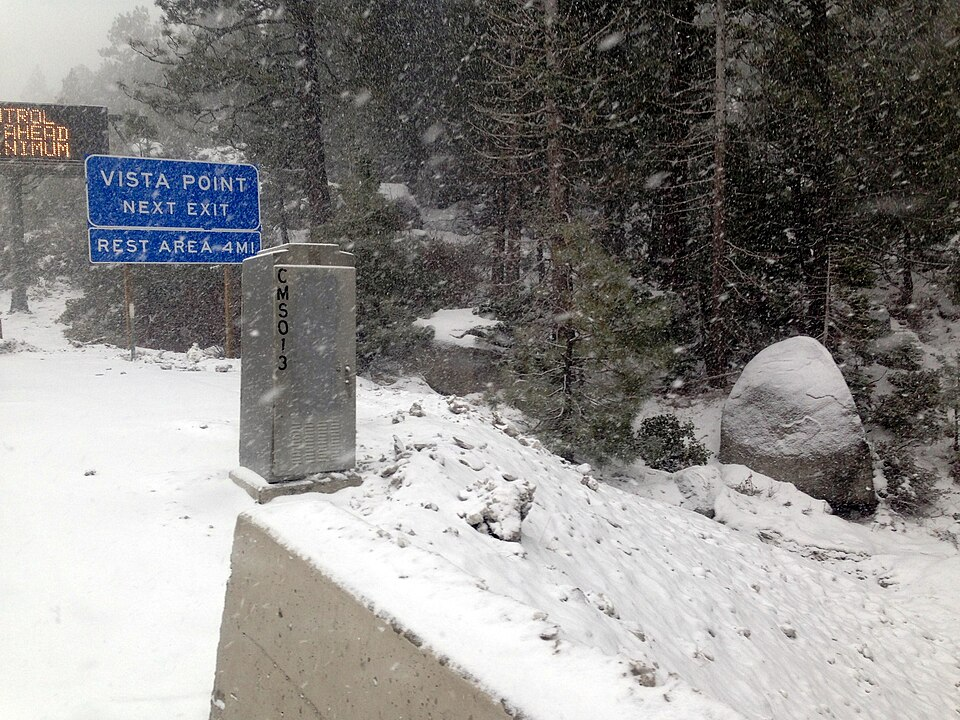
Short answer: probably yes, or at least you need to be carrying them, even if the highway looks perfectly clear when you leave home. If you’re driving I-80 or Highway 50 into the Tahoe Basin between November and April, “I’ll just wing it” is how people end up parked on the shoulder in a snowstorm, getting passed by everyone who read this first.
Here’s what “chain control” actually means, which roads get it, whether your all-wheel-drive SUV actually gets you out of it (spoiler: only sometimes), and how to put the damn things on without blocking traffic.
What “chain control” actually means
Caltrans doesn’t just say “chains required” and leave it at that. There are three requirement levels, and they get posted on roadside signs as you approach the mountains — R-1, R-2, and R-3. Knowing the difference matters, because two of the three have real exceptions and one doesn’t.
- R-1: Chains are required on all vehicles except passenger cars and light trucks under 6,000 lbs that have snow tires on at least two drive wheels. If that’s you, you’re exempt from putting chains on — but you still have to be carrying them in the car. Any vehicle towing something needs chains on one drive axle regardless.
- R-2: The exemption narrows. Now it’s only four-wheel-drive vehicles under 6,500 lbs with snow tires on all four wheels. Everyone else chains up. Even exempt 4WD vehicles still have to carry a set of chains for their drive wheels.
- R-3: No exceptions. Every vehicle, chains on, full stop. In practice, Caltrans usually closes the highway before conditions get bad enough to hit R-3 — but it exists, and it’s not a bluff.
The requirement level is decided storm by storm, sometimes hour by hour, and it’s posted at electronic signs and staffed checkpoints as you climb toward the pass. You follow whatever the signs say that day, not what a website (including this one) told you last week.
Does having AWD or 4WD get you out of it?
Sometimes — and this is the part people get wrong most often. All-wheel drive and four-wheel drive help you accelerate and maintain traction. They do approximately nothing for your ability to stop on ice, which is what actually gets people stuck sideways on Donner Summit. Caltrans’ exemption reflects that reality: it’s narrower than most drivers assume.
Under R-1, a plain front- or rear-wheel-drive car with snow tires on two drive wheels is exempt. Under R-2, only 4WD/AWD with snow tires on all four wheels gets a pass — a 4WD truck riding on all-season tires does not qualify. And under R-3, nobody’s exempt, 4WD or not. Rental car with all-season tires and no 4WD? You’re chaining up under R-1 already.
The one rule that never has an exception: even if your vehicle is exempt, you still have to physically have chains in the car. Caltrans and CHP can check, and “I didn’t think I’d need them” isn’t a defense.

Which roads into Tahoe actually get chain control
There are two main ways in, and both climb over a mountain pass, which is exactly where chain control happens:
- Interstate 80 over Donner Summit (elevation just over 7,000 feet) is the route from Sacramento and the Bay Area to the North Shore — Truckee, Kings Beach, Tahoe City. It’s the busier of the two and the one that makes the news when it shuts down.
- U.S. Highway 50 over Echo Summit is the route to South Lake Tahoe from Sacramento and the Central Valley. It’s a two-lane mountain highway in spots, which means chain control here can back traffic up fast.
Once you’re actually in the basin, the roads that ring the lake — Highway 89 on the west shore, Highway 28 on the north and east shores — can also get slick and occasionally see restrictions of their own during a storm, even though they’re not the primary chain-control checkpoints Caltrans posts about. Don’t assume you’re done with winter driving just because you made it over the summit.
What actually happens if you don’t have chains
Two things, neither of them good. First, CHP can cite and fine you for not carrying required chains when a checkpoint is active — this isn’t a rumor, it’s stated plainly in CHP’s own winter driving guidance. Second, and more immediately: you don’t get through. Checkpoints turn cars around or hold them at pullouts until they’re compliant. That’s a genuinely bad way to lose two hours of a ski weekend, sitting on the shoulder while everyone who packed chains keeps driving.
How to actually put chains on (without holding up traffic)
This is the part everyone dreads, and it’s a lot less miserable if it’s not the first time you’ve done it.
- Practice at home first. Seriously. Do it once in your driveway on a dry, 50-degree afternoon so you’re not decoding instructions for the first time at 6,800 feet in the dark with your hands going numb.
- Pull all the way off the roadway. Caltrans is explicit about this: find a spot to get completely off to the right, not just onto the shoulder in a travel lane. Chain-up areas are marked, but if you can’t reach one, any safe, fully-off-road pullout works.
- Chain the correct wheels. Drive wheels, not just whichever tire is easiest to reach — check your owner’s manual if you’re not sure which axle that is.
- Keep it slow once they’re on. 25–30 mph with chains installed. They’re a traction aid, not a suspension upgrade.
- Take them off at the right spot. Wait for an “End of Chain Control” sign, then pull off safely again before removing them — driving on dry pavement with chains on chews up both the chains and the road.

What to actually buy, and where to get it
Cable-style chains are lighter, cheaper, and easier for most people to install on a passenger car or crossover — they’re the right call for most Tahoe weekend trips. Diamond-pattern link chains grip better in deep snow but are heavier and more of a wrestling match to put on; they’re more of a truck or serious-4WD choice. Either way, buy them sized to your actual tire before you go — a set that doesn’t fit your tires is functionally the same as not having chains at all.
You can buy them well before you leave home at any auto parts store, or pick them up at one of the shops in Truckee, South Lake Tahoe, or along Highway 50 and I-80 that specifically stock chains for exactly this situation — they exist because so many people show up without them. Just know that buying at 6,000 feet during an active storm means paying storm prices and hoping they still have your size.
Check conditions before you leave, not when you’re already climbing
Chain requirements change by the hour during a storm, so check before you go: Caltrans QuickMap shows live chain control status by route, and the Caltrans Highway Information Network line (1-800-427-ROAD / 1-800-427-7623) has the same information by phone. Five minutes of checking before you leave the driveway beats finding out at the checkpoint.
Once you’ve got the driving part handled, the next decision is usually where to actually stay — see our North vs. South Lake Tahoe breakdown for which side makes sense depending on which route you’re driving in on. And if you’re wondering what to actually do once you’re up there, our Lake Tahoe winter activities guide covers the rest of the trip.

Quick answers
Do I need chains if I have snow tires? Under R-1, snow tires on two drive wheels can exempt a passenger car — but you still have to carry chains. Under R-2 and R-3, snow tires alone usually aren’t enough unless you’re also 4WD/AWD (R-2) or it doesn’t matter at all (R-3).
Can I just turn around instead of chaining up? Usually, yes, if you catch the checkpoint before committing to the chain-control zone — but plan on a serious detour or delay, not a quick alternate route.
Do rental cars count as exempt if they have all-wheel drive? Only if they also have snow tires on all four wheels, which most rental all-season tires are not. Assume you’ll need chains in a rental unless you’ve specifically confirmed otherwise.


Leave a Reply