
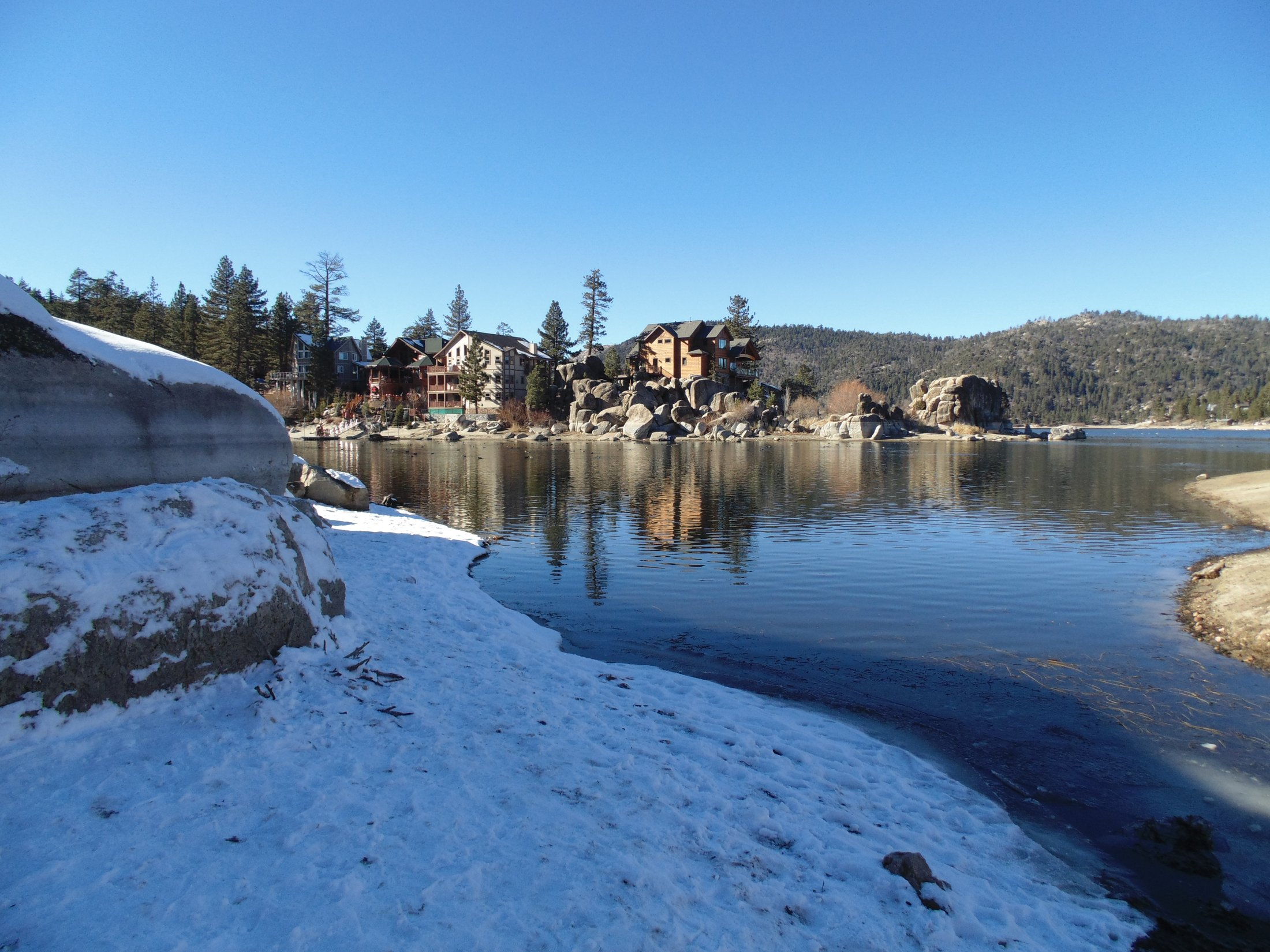
Type “Big Bear vs. Lake Arrowhead” into Google and you’ll mostly get vacation-rental companies and real-estate agents telling you their lake is better — which makes sense, since they’re trying to rent or sell you a cabin on it. Here’s the version without a listing to sell: both are real mountain towns about two hours from most of Los Angeles and Orange County, both sit around a lake ringed by pine forest, and the right pick genuinely depends on what you want out of the weekend, not which one has a flashier marketing site.
This article may contain affiliate links. If you book or buy through one, California Wanderer may earn a small commission at no extra cost to you. As an Amazon Associate I earn from qualifying purchases.
The Quick Answer: Which Should You Visit?
Pick Big Bear Lake if you actually want to get out on the water, ski or ride, or bring a dog. Big Bear Lake is public — you can rent a boat, launch your own, swim off a public beach, and just show up. It also has two full ski resorts (Snow Summit and Bear Mountain) right in town.
Pick Lake Arrowhead if you want a quieter, more upscale weekend built around the village, dining, and looking at the lake rather than being on it. The lake itself is privately owned by the Arrowhead Lake Association, and a random visitor can’t rent a kayak or jump in — more on exactly what that means below, because it trips up a lot of first-time visitors.
Neither is “wrong.” They’re a 30–40 minute drive apart in the same mountain range, and plenty of people do both in one trip. But if you’re choosing one, the public-lake-versus-private-lake difference should probably decide it before anything else does.
Big Bear Lake: What to Expect
Big Bear Lake sits at 6,743 feet in the San Bernardino Mountains, about 100 miles east of Los Angeles. The lake itself is a genuine reservoir — 7 miles long, nearly 3,000 acres of surface area — built behind dams from 1884 and 1912 that are still there and still historic landmarks. None of that trivia matters for planning your trip except for one thing: it’s public. There are public boat launches, marinas that rent everything from pontoon boats to jet skis, a swim beach, and fishing that’s genuinely good (trout, bass, bluegill, catfish). If the plan is “get on the water,” Big Bear just lets you do that without knowing anybody.
Winter is the other half of Big Bear’s identity. Snow Summit and Bear Mountain — now operated together as Big Bear Mountain Resort — give you two real ski areas without leaving town, plus mountain biking on the same lift-served terrain once the snow melts. Buy lift tickets ahead of a weekend visit; walk-up pricing at the window is usually worse. Village Drive, the town’s main strip, is small — a few blocks of gift shops, pizza places, and the kind of restaurant that’s been there since the 90s — but it’s walkable and it’s genuinely the town center, not a tourist trap built separately from where locals actually live.

Lake Arrowhead: What to Expect
Lake Arrowhead sits lower and closer than Big Bear — 5,174 feet, about 80 miles from downtown LA — and the lake is smaller (782 acres) but deep, dropping to 185 feet in places. Here’s the part that actually matters for your trip: the lake is privately owned by the Arrowhead Lake Association, and lake rights belong to specific homeowners in the Arrowhead Woods area, not to visitors. There’s no public boat ramp and no public swim beach. An Airbnb listing that says “lake access” almost never means you can swim or launch a kayak — check that claim before you book, because it’s a common source of disappointment.
That doesn’t mean tourists can’t experience the lake at all. The Lake Arrowhead Queen is a narrated paddlewheel tour boat that departs from the Village and is genuinely the easiest way for a non-member to actually get on the water. Staying at Lake Arrowhead Resort & Spa also comes with beach access as a hotel guest. Outside of that, Lake Arrowhead’s real appeal is the Village itself — a Norman-style shopping and dining district built starting in the 1920s, when this was a Hollywood retreat — plus access to the Pacific Crest Trail and a generally quieter, more upscale feel than Big Bear’s more casual, activity-driven vibe.

Which Is Better for Families vs. a Couples’ Getaway
For families, especially with kids who want to swim, fish, or ride in a boat, Big Bear is the easier trip: public beach, boat rentals with no membership required, and a downhill/tubing hill in winter that doesn’t require lift-ticket logistics. It also just tolerates more chaos — Village Drive is built for people wandering in from a beach day, not a quiet dinner.
For a couples’ weekend or a quieter trip with friends, Lake Arrowhead pulls ahead. The private lake actually works in its favor here — there’s less boat traffic and noise on the water you’re looking at from your cabin porch, the Village leans toward sit-down restaurants and wine bars rather than arcade-and-ice-cream energy, and the whole town reads a notch more upscale. If the goal is a good dinner and a fireplace, not a packed beach day, Arrowhead is built for that.
Winter vs. Summer: Which Town Wins Each Season
Winter goes to Big Bear, clearly. Two lift-served ski resorts in town beats a lake you can only look at from shore. Bear Mountain and Snow Summit get real snow most seasons (the area averages around 72 inches a year), and even a non-skier can ride the scenic chair or just walk around a proper mountain-town main street in the snow. Lake Arrowhead is genuinely pretty in winter — the Village looks like a postcard with snow on the A-frame roofs — but there’s no equivalent activity waiting for you there.
Summer is closer, but still leans Big Bear if being on the water matters to you, and leans Arrowhead if a quiet porch and a good restaurant matter more. Both towns cool off nicely compared to the LA basin in July and August, which is honestly half the reason either one is worth the drive in summer.
What to Pack for Either Trip
- a set of tire traction chains or cables — Highway 18, 330, and 38 into Big Bear, and Highway 189/173 into Arrowhead, can all require chains or a traction device during a winter storm, checkpoint or not. Keep a set in the trunk between November and April.
- a soft-sided cooler — Neither lake town has much shoreline shade if you’re out for a summer boat day or a picnic by the water at the Village; a soft-sided cooler is easier to haul around a marina or dock than a hard one.

Getting There and Where to Stay
Both towns are a similar drive from most of LA and Orange County — Big Bear runs about 2 to 2.5 hours depending on where you’re starting and which route you take (Highway 330 from San Bernardino, or the longer but gentler Highway 38 from Redlands); Lake Arrowhead is usually a little faster, closer to 1.5 to 2 hours, since it’s the nearer of the two to the 15 and 210 freeways. In a winter storm, both drives can slow down significantly or require chains, so it’s worth checking conditions the morning you leave rather than assuming the drive will take what a map app says in July.
Lodging on both sides is dominated by cabin rentals (Vrbo and Airbnb both have large inventories in each town) plus a handful of small inns and resorts. If lake access matters to you specifically, that’s the one thing worth double-checking directly with the host or property before you book Arrowhead — “near the lake” and “has deeded lake rights” are not the same claim, and only one of them gets you on the water.

Bottom Line
Big Bear is the pick for anyone who wants to be active on or in the water, ski in winter, or bring the whole family without worrying about lake access. Lake Arrowhead is the pick for a quieter, more polished weekend built around the Village, a good meal, and looking at a lake rather than needing to be on it. Both are legitimate mountain escapes a couple hours from the city — the honest answer to “which is better” is that it depends which of those two trips you actually want.

Leave a Reply