
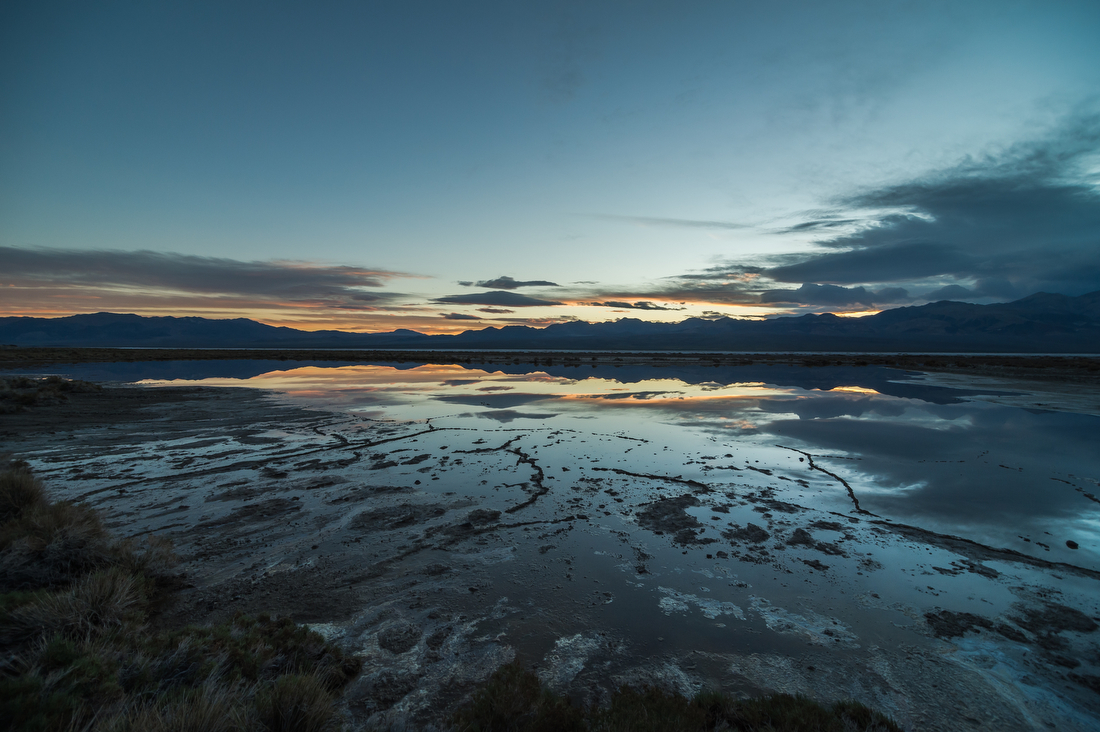
Death Valley National Park doesn’t have a town in the middle of it. The nearest real grocery store, gas station with reliable prices, and hotel with a normal price tag are all outside the park boundary, which means every visit starts with the same question: stay inside the park and pay for convenience, or stay in a gateway town and drive in every day.
Both work. Neither is wrong. But they set up completely different trips, and the right call depends on how many days you have, what you’re actually there to see, and how much you want to spend. Here’s how to decide.
This article may contain affiliate links. If you book or buy through one, California Wanderer may earn a small commission at no extra cost to you. As an Amazon Associate I earn from qualifying purchases.
The short answer
If you’ve got two nights or fewer and want to maximize time at Badwater Basin, Zabriskie Point, and Artist’s Palette, stay inside the park at Furnace Creek. You’ll pay more per night, but you’ll save an hour or more of driving each day, and in a place this hot, that’s not a small thing.
If you’re on a budget, staying three-plus nights, or planning day trips that range toward the Panamint Mountains or the eastern Sierra, a gateway town makes more sense. You’ll spend less, eat at an actual restaurant with a menu that changes, and still be inside the park gates in 45 minutes to an hour.
Staying inside the park: Furnace Creek
Furnace Creek is the closest thing Death Valley has to a town center — a cluster of lodging, a gas station, a general store, and the park’s main visitor center, all sitting below sea level in the shadow of the Panamint Range. Everything here is run by a single concessionaire, Xanterra, which books direct through its own website rather than through third-party travel sites. That matters: don’t expect to find Furnace Creek rooms on the usual hotel-search sites, and book early, because rooms sell out well ahead of the cooler months.
The Ranch at Death Valley is the more affordable of the two Furnace Creek properties — motel-style rooms, a spring-fed pool that feels borderline miraculous after a day in the heat, and a short walk to the general store. The Inn at Death Valley is the upscale option next door: a historic 1927 adobe building with a separate pool and dining room, priced accordingly. Both put you minutes from Badwater Basin and Zabriskie Point, which is the entire point of paying the premium.
Staying inside the park: Stovepipe Wells and Panamint Springs
Two more in-park options sit farther from Furnace Creek and get overlooked because of it, but they’re worth knowing about depending on where you’re headed.
Stovepipe Wells Village sits about 25 minutes northwest of Furnace Creek, right next to Mesquite Flat Sand Dunes — genuinely useful if sunrise or sunset at the dunes is on your list, since you can walk out your door and be there in minutes instead of driving in from somewhere else. It’s simpler and cheaper than Furnace Creek, with a motel-style layout, a small pool, and a general store. Also run by Xanterra, also booked direct.

Panamint Springs Resort is the outlier: a small, independently run spot near the park’s western edge, closer to the Panamint Valley than to Furnace Creek. It’s the right call if you’re entering the park from the west on your way to or from the eastern Sierra, but it’s a genuine haul to the park’s marquee sights on the valley floor — plan on 45 minutes to an hour each way to Badwater or Zabriskie.
Staying in a gateway town
Three towns cover the practical gateway options, each tied to a different direction into the park.
Pahrump, Nevada sits about an hour from Furnace Creek on the park’s east side and is by far the most built-up of the three — chain hotels, real grocery stores, casinos, and a wider spread of restaurant options than anything inside the park. It’s the budget-friendly choice if you’re comfortable with the drive and want normal town amenities at the end of the day. Worth a look if price is driving the decision: see current Pahrump hotel rates. If you’d rather have one specific, reliable pick instead of scrolling search results, Best Western Pahrump Oasis is a solid, well-located option right on the highway into town.
Beatty, Nevada is smaller and closer, roughly 45 minutes from Furnace Creek via the park’s northern entrance, with a handful of motels and the genuinely interesting Rhyolite ghost town just outside town. It’s a good fit if Pahrump feels too big and Furnace Creek feels too pricey — a middle option with less selection but a shorter drive. You can check Beatty lodging options to see what’s around on your dates.
Lone Pine, California is the pick if your trip includes the eastern Sierra — it sits at the base of Mount Whitney, right next to the Alabama Hills, and puts you about 90 minutes from Furnace Creek via Panamint Springs. Don’t choose it purely to save money on Death Valley lodging; choose it because you’re also doing Sierra stuff and don’t want to drive the long way around twice. If that’s your route, browse Lone Pine hotels before you book. For a specific, classic option right in town, Dow Villa Motel is walking distance to Lone Pine’s restaurants and has been putting up climbers and road-trippers for decades.

Matching your stay to what you want to see
Use the sights themselves as the tiebreaker if the above still leaves you on the fence.
Headed straight for Badwater Basin, Zabriskie Point, Artist’s Palette, or Dante’s View — the park’s most-photographed cluster, all close together near the valley’s east-central section? Furnace Creek wins; everything else adds real drive time to an itinerary that’s already mostly driving.

Prioritizing Mesquite Flat Sand Dunes, especially for sunrise or sunset light? Stovepipe Wells puts you right there.
Planning to see Racetrack Playa or Ubehebe Crater? Check current road conditions before you commit to a base — the road out to Racetrack Playa is unpaved and sometimes closed or rough enough to need high clearance, and conditions change with the season. The park’s current conditions page is the source to check, not a guess from a guidebook.

Budget snapshot
Rough nightly ranges to set expectations, not a price quote — check current rates before booking, since desert lodging swings hard by season:
The Inn at Death Valley runs well into upscale-resort territory. The Ranch at Death Valley and Stovepipe Wells Village land in the moderate range, more than a standard chain hotel but not wildly so. Panamint Springs Resort is usually the cheapest in-park option. Gateway-town chain hotels in Pahrump typically undercut every in-park option, sometimes by half or more, which is the real financial argument for the extra drive time. Beatty and Lone Pine sit in between — pricier than Pahrump’s chain options most of the year, still generally cheaper than Furnace Creek.
The bottom line
Short trip focused on the valley floor’s biggest sights: pay up and stay at Furnace Creek, or at Stovepipe Wells if the dunes are the priority. Longer trip, tighter budget, or a route that includes the eastern Sierra or just wants a real town to come back to at night: pick a gateway town and treat the daily drive as part of the trip, not a tax on it. Either way, book lodging early — especially from October through April, when Death Valley’s cooler weather turns it into one of the busiest parks in the system, and rooms both inside and outside the park sell out weeks ahead. Visiting in summer instead? Read California Wanderer’s guide to Death Valley heat safety before you lock in dates.
Working out lodging for a different park this trip? The same in-park-versus-gateway-town logic applies to where to stay near Yosemite and where to stay near Sequoia & Kings Canyon.

Leave a Reply