
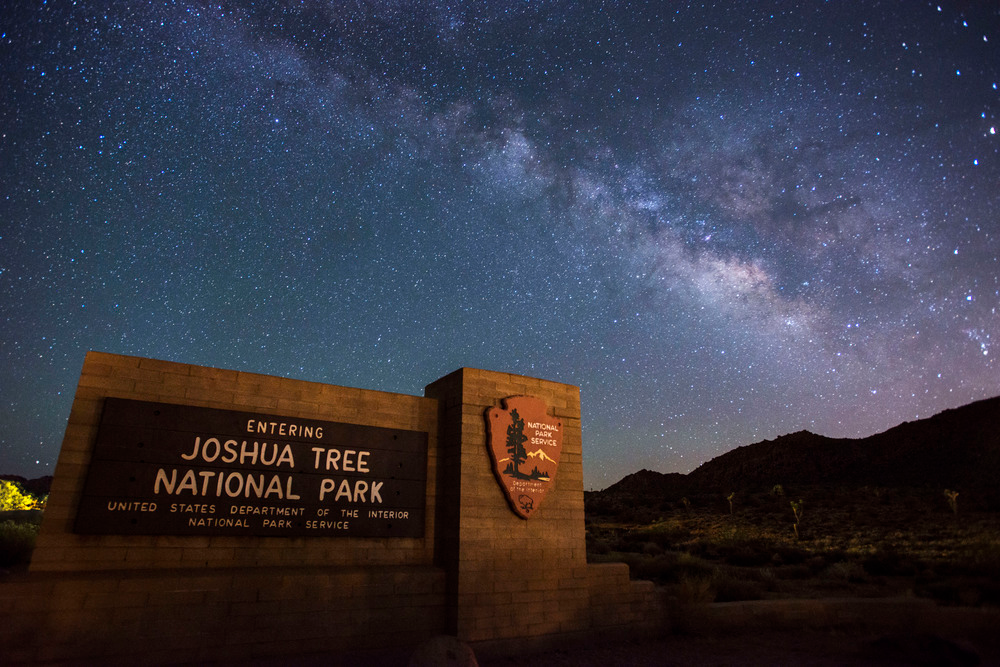
Joshua Tree National Park is one of the easiest places in Southern California to see a genuinely dark sky without a long drive into the backcountry. The park is an official International Dark Sky Park, and on a clear, moonless night the Milky Way is visible to the naked eye from spots a short walk from a parking lot. Getting a good view isn’t complicated, but timing it right — and knowing where to stand once you’re there — makes the difference between a faint smudge overhead and a sky genuinely full of stars.
This article may contain affiliate links. If you book or buy through one, California Wanderer may earn a small commission at no extra cost to you. As an Amazon Associate I earn from qualifying purchases.
Quick answer: the best stargazing in Joshua Tree happens on clear, moonless nights, and the moon’s phase matters more than the season. For the richest Milky Way views specifically, aim for late spring through summer on a new-moon week. For the longest stretch of darkness in a single visit, winter nights near the solstice offer full darkness as early as 5 p.m.
Why Joshua Tree Is One of the Best Places in Southern California to See Stars
Joshua Tree National Park holds an official International Dark Sky Park designation from DarkSky International, recognizing it as having some of the darkest night skies left in Southern California. That matters more than it might sound: most of the region’s population lives within a couple hours’ drive, and light pollution from the Coachella Valley and greater Los Angeles washes out faint stars over huge areas. Joshua Tree’s high desert elevation and distance from major light sources keep a meaningful amount of its sky genuinely dark, which is why astrophotographers and casual visitors alike drive out specifically for it.
The Best Time of Year for Stargazing in Joshua Tree
Every season in the park has something different to offer after dark, and the “best” one depends on what a visitor actually wants to see.
Winter brings the longest nights of the year. Around the solstice, sunset can come as early as 4:30 p.m., with full darkness by 5 p.m. — which means a far longer window to stargaze without staying up until midnight. Winter skies feature Orion, Sirius, Gemini, and Taurus riding high overhead.
Spring, especially around the equinox, brings Arcturus into the eastern sky at dusk and puts Leo high in the south. Nights are noticeably milder than winter, which makes for a more comfortable long sit outside.

Summer is the Milky Way’s season. On a moonless summer night, the galactic core and the Summer Triangle are both visible, and mid-August brings the Perseid meteor shower, one of the most reliable annual meteor showers visible from the park. The tradeoff is daytime heat, which can make midday hours in the park genuinely dangerous without preparation.
Fall, around the autumnal equinox, brings the Great Square of Pegasus up in the northeast, and on a moonless night the Andromeda Galaxy becomes visible to the naked eye — one of the few galaxies beyond the Milky Way a visitor can actually see without a telescope.
The Best Time of Month: Why the Moon Matters More Than the Season
Season sets the backdrop, but the moon decides whether a given night is actually good for stargazing. Bright moonlight washes out the same faint stars and Milky Way detail that a dark sky park exists to show off, so the single biggest variable to check before a trip isn’t the month — it’s the moon’s phase and its rise and set times for that specific date. A night within a few days of the new moon, when the sky stays genuinely dark from dusk until dawn, will outperform almost any full-moon night regardless of season.
Where to Go: The Park’s Best Stargazing Spots
On a clear, moonless night, the night sky is impressive from nearly anywhere in the park — but a handful of spots are specifically called out by the park for being easy to reach, away from the brighter pockets of light pollution near the park’s edges, and set up with safe pullout parking.
The park designates the Quail Springs, Hidden Valley, Cap Rock, and Ryan Mountain parking lots as official stargazing areas, all accessible without a hike. For visitors staying overnight, Cottonwood Campground has the darkest skies of the park’s nine campgrounds, since it sits farthest from the park’s more developed, higher-traffic entrances.

For a quieter option with even less passing traffic, the roadside pullouts along Pinto Basin Road, between the Cholla Cactus Garden and Cottonwood, are consistently some of the darkest easily reached spots in the park.

What to Pack for a Night Under the Desert Sky
None of the gear for a good night out here is exotic, but a few specific items make a real difference once the sun goes down and the temperature starts dropping.
What to Pack for Joshua Tree Stargazing
- a headlamp with a red-light mode — human night vision takes 20 to 30 minutes to fully adjust to darkness, and a single glance at a white light resets it; a red-light mode keeps hands free without ruining anyone else’s view either.
- a packable insulated jacket — desert temperatures can drop 30 degrees or more after sunset even following a hot day, and most stargazing spots have no shelter from the wind.
- a lightweight folding chair — looking straight up for an hour is a lot easier sitting back in a chair than standing on uneven, rocky ground in the dark.
Bring food and water regardless of season, since most stargazing areas have no running water nearby, and pack everything out when leaving.
Safety and Etiquette After Dark
Night hazards in the desert are real but easy to manage with a little awareness. Cacti, uneven ground, and the park’s nocturnal wildlife are genuinely hard to see after dark, so closed-toe shoes and a careful step matter more here than they would on a daytime trail.
At the designated pullouts and parking-lot viewing areas, stay within about 20 feet of the vehicle and remain awake — overnight camping isn’t permitted along roadsides or in parking lots, only in designated campgrounds or with a backcountry permit. The park’s Day Use Only areas close from dusk to dawn specifically to protect wildlife, so it’s worth double-checking a chosen spot isn’t one of them before settling in. Pets must stay leashed at all times and aren’t allowed on trails or in the backcountry at any hour.
One quirk worth knowing: Joshua Tree never closes. If the entrance fee station is unstaffed when arriving at night, visitors can pay on the way out instead, as long as a station is open then.

Planning the Logistics: Passes, Camping, and Permits
A standard entrance pass runs $30 per vehicle for seven days, or $55 for an annual pass specific to Joshua Tree; an America the Beautiful annual pass ($80) covers this park along with every other participating federal site, and is worth it for anyone planning more than one or two national park trips a year.
Most of the park’s campgrounds take reservations through Recreation.gov, and booking ahead is strongly recommended for weekends, holidays, and spring, when sites fill fast. A few campgrounds remain first-come, first-served. Anyone planning to sleep in the backcountry rather than a campground needs a free backcountry permit, available online, by phone, or in person at the Twentynine Palms permit office.
For anyone building an overnight trip around this rather than a quick evening visit, California Wanderer’s full Joshua Tree camping guide covers campground-by-campground details, fees, and water access.

Ranger Programs and the Night Sky Festival
The park runs an annual Night Sky Festival, along with ranger-led night sky programs scheduled periodically throughout the year — check the park’s event calendar or a visitor center for current dates. Sky’s the Limit Observatory and Nature Center, a short drive away in Twentynine Palms, also runs its own public viewing nights and partners with the park on astronomy programming.
Photographing the Night Sky
A tripod is close to mandatory for night photography here — even a fraction of a second of camera shake ruins a long-exposure shot of the stars. Shoot in manual mode, with the widest aperture the lens allows (f/2.8 or wider is ideal), ISO 1600 or higher depending on the camera, and a starting shutter speed around 25 seconds, adjusting one setting at a time from there. “Painting with light” — using a flashlight to illuminate foreground objects during a long exposure — isn’t permitted in the park.
However the night is spent, the combination that matters most is simple: a clear sky, a new moon, and one of the park’s quieter corners. Get those three right and Joshua Tree does the rest.
Leave a Reply